Posts
Showing posts with the label Tea
History of Chinese Tea
- Get link
- X
- Other Apps
Legends say that the ancient Chinese deity Shennong, who lived 5,000 years ago, discovered tea. Shennong sampled 365 kinds of plants to test how they can influence one's health. He chewed tea leaves to prevent himself from poisons. The book "The Classics of Chinese Medicine" documented these 365 herbs. Before 200 B.C., ancient Chinese literature talked about tea soup and tea porridge. They probably used fresh leaves. About 2000 years ago, people created tea bricks by breaking, compressing, drying fresh tea leaves. Although the dried tea bricks were convenient for storage and transportation, they tasted quite bitter. The 7th century (or Tang Dynasty) marked the transition of tea from medicine to daily drink. People discovered that by steaming the fresh leaves and squeezing out the juice, tea became less bitter. Although it was still grassy, the tea-soup was pretty good as a daily drink after adding ginger and salt. Tang Dynasty people prefer metal teacups because precious ...
Tea in Chinese Cuisine
- Get link
- X
- Other Apps
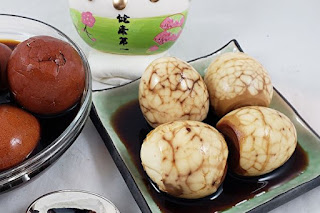
Before the 7th century, Chinese people regarded tea as medicine and food. One may perceive this concept from the culture preserved in some Chinese ethnic groups isolated in rural areas. Because of their disconnection from the outside world, they kept some ancient traditions for thousands of years. For example, the Jino Chinese ethnic group in Southwest China has a "tea leaf salad" made from fresh tea leaves mixed with red chili pepper, minced garlic, ginger, salt, and mountain spring water. The Bai ethnic group, also in Southwest China, is famous for its "Three-Course Tea" to welcome guests. The first course of "Bitter Tea" was a direct brew of baked and ground tea leaves. The bitter flavor reminds one that life starts with hardship. The second course was "Sweet Tea" A host added honey and baked walnut chips to brewed tea. So after enduring hardship, one can taste the happiness of life. The final course was "Mixed Flavor Tea" with hone...
The Science of Chinese Tea
- Get link
- X
- Other Apps
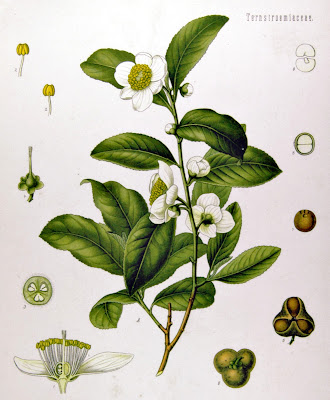
There are two kinds of plants for tea-making. Camellia Assamica is a kind of tall trees with large leaves. Grown in India and Southwest China, these leaves are suitable for making black tea. Green tea or oolong tea is from leaves of Camellia Sinensis, small leaf shrubs that thrive in East Asia, although these delicate leaves are great for making all kinds of tea. Green tea is an unfermented tea. Fresh leaves were harvested when they were tender, then laid out in the air for a while to reduce moisture. The withered leaves are rolled or pressed into shapes, then heated dry to form the final products. Because it is unfermented, green tea is the best when fresh. During the drying process, flower tea can be created by adding fragrant flowers. Black tea is completely fermented tea. After the withering process, tea leaves were piled together and kept warm for a fermenting process. Completely fermented leaves are then dried to form the final products. Because they are fermented, bl...